
Plain-English definitions
AI Glossary: 31 Terms in Plain English
AI news is full of words like tokens, context windows and fine-tuning. Here is each one in a single plain sentence, so the headlines make sense.
When you are done, try the quiz. It is scored in your browser and takes about two minutes.
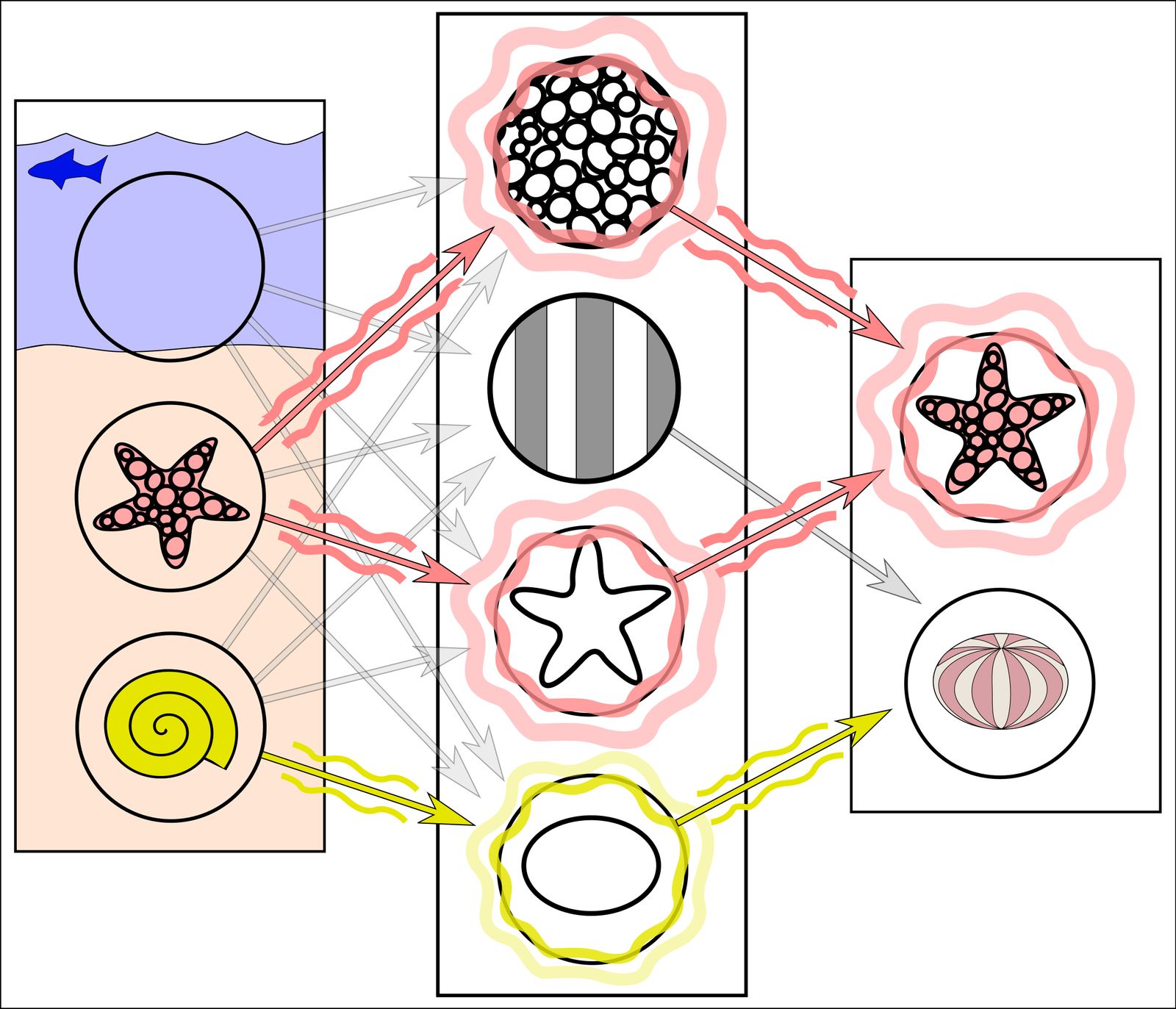
A simple network linking features to answers: Mikael Häggström, M.D., CC0
The glossary
| Term | Plain definition |
|---|---|
| Artificial intelligence (AI) | Computer systems that do tasks we usually link with human thinking, like understanding language or recognizing images. |
| Machine learning | A way to build AI by letting a program learn patterns from examples instead of following hand-written rules. |
| Neural network | A model made of layers of simple connected units whose connection strengths are adjusted during training. |
| Deep learning | Machine learning that uses neural networks with many layers. |
| Model | The trained program that takes an input and produces an output, such as an answer or an image. |
| Parameters | The internal numbers, or weights, that training adjusts so the model makes better predictions. |
| Training | The process of showing a model huge amounts of data and adjusting its parameters to reduce mistakes. |
| Inference | Using a trained model to produce an answer for new input, which is what happens when you chat with one. |
| Large language model (LLM) | A very large neural network trained on text to predict the next piece of text, used for chatbots. |
| Transformer | The neural network design behind modern LLMs, built around a mechanism called attention. |
| Attention | The part of a transformer that lets each word weigh which other words in the input matter most. |
| Token | A chunk of text, often a word or part of a word, that a language model reads and writes. |
| Context window | How many tokens a model can consider at once, including your prompt and its reply. |
| Prompt | The instruction or question you give an AI model. |
| System prompt | Background instructions set by an app that shape how the assistant behaves in every chat. |
| Hallucination | When an AI states something false or made up as if it were fact. |
| Fine-tuning | Extra training of an existing model on a smaller, focused dataset to adapt it to a task. |
| Embedding | A list of numbers that represents the meaning of text or an image so similar things end up close together. |
| Retrieval-augmented generation (RAG) | A setup where the AI first looks up relevant documents and then writes an answer using them. |
| Generative AI | AI that creates new content such as text, images, audio or video. |
| Diffusion model | An image or video generator that learns to turn random noise into a clear picture step by step. |
| Multimodal | Able to work with more than one type of input or output, such as text, images and audio. |
| AI agent | An AI system that plans and takes actions, like browsing or running code, to complete a goal. |
| Reasoning model | A model designed to work through a problem in steps before giving its final answer. |
| Benchmark | A standard test used to compare how well different models perform. |
| Overfitting | When a model memorizes its training data so closely that it does poorly on new examples. |
| Bias | Unfair or skewed patterns in AI output, often inherited from the data it learned from. |
| Open-weight model | A model whose trained parameters are published so others can download and run it. |
| GPU | A graphics chip that does many calculations at once, which makes it the workhorse of AI training. |
| Zero-shot | Asking a model to do a task without giving it any examples first. |
| Few-shot | Giving a model a handful of examples in the prompt so it copies the pattern. |
Quick quiz
Score: 0 / 8
Sources
Facts on this page were checked against these sources (updated Oct 1, 2026). Spot an error? Email hello@fireempireshop.com.