
The Turing Test
Can a machine pass as human?. In 1950 Alan Turing proposed a party-game test for machine intelligence. Learn how the imitation game works and why it is still debated today.
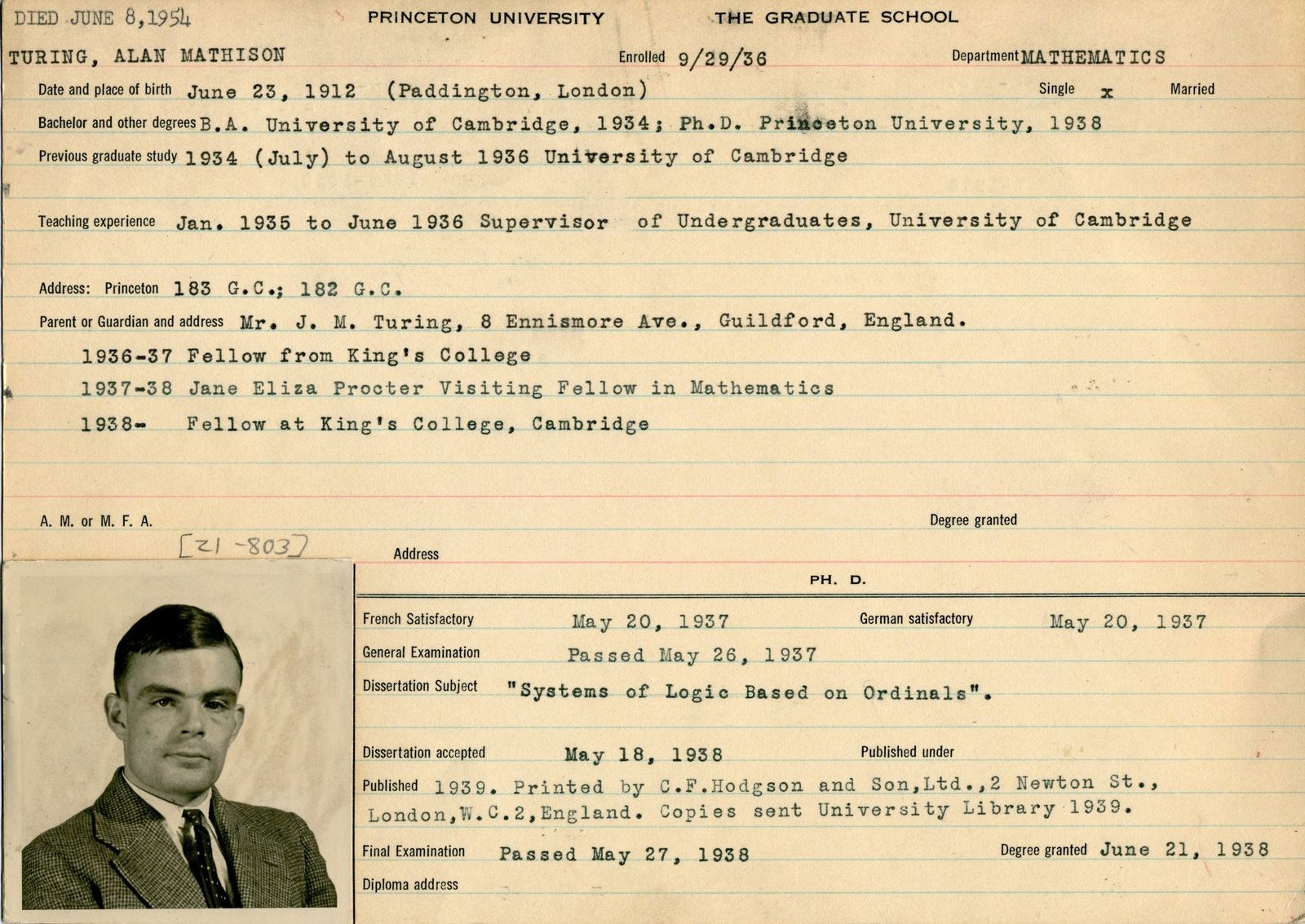
Alan Turing at Princeton, 1936: Unknown author, Public domain
Swapping a hard question for a fair one
Can machines think? Alan Turing opened his famous 1950 paper with that question and then set it aside almost at once. Words like think and machine, he argued, were too slippery to settle by definition. Instead he proposed a practical experiment he called the imitation game.
In the version most people know, a human judge holds typed conversations with two hidden partners, one a person and one a computer. The judge can ask anything at all. If the judge cannot reliably tell which partner is the machine, Turing suggested, we have about as good a reason to credit it with thinking as we have for crediting other people.
Video: The Turing Test - Computerphile (Computerphile), embedded from YouTube.
Who Turing was
Turing was a British mathematician who had already helped invent computer science. In 1936 he described an imaginary device, now called a Turing machine, that captures what any step-by-step calculation can do. During the Second World War he worked at Bletchley Park, where he played a leading part in breaking German naval codes.
After the war he worked on early stored-program computers in London and Manchester. His 1950 paper was written for philosophers as much as engineers, and it calmly answered a list of objections, from religious arguments to the claim that machines can only do what they are told.
What the test does and does not measure
The test is about behavior, not inner experience. A program could pass by being good at conversation without understanding anything in a deeper sense, and critics have pressed that point for decades. The philosopher John Searle's Chinese Room argument from 1980 is the best known challenge: following rules for shuffling symbols, he said, is not the same as knowing what they mean.
Others note that the test rewards deception and can be gamed. Early chatbots such as ELIZA in the 1960s fooled some users with simple tricks, like turning statements back into questions.
The test in the age of chatbots
Modern language models can hold fluent conversations. In a 2025 study at UC San Diego, people in five-minute text chats picked GPT-4.5, prompted to play a human persona, as the human 73 percent of the time. That has shifted the debate. Many researchers now treat the Turing test as a historical milestone and a useful thought experiment rather than a finish line, and they prefer narrower benchmarks that measure reasoning, accuracy and reliability.
Turing's real gift was the framing: judge a machine by what it can do, keep an open mind, and expect the question to keep changing as the machines do.
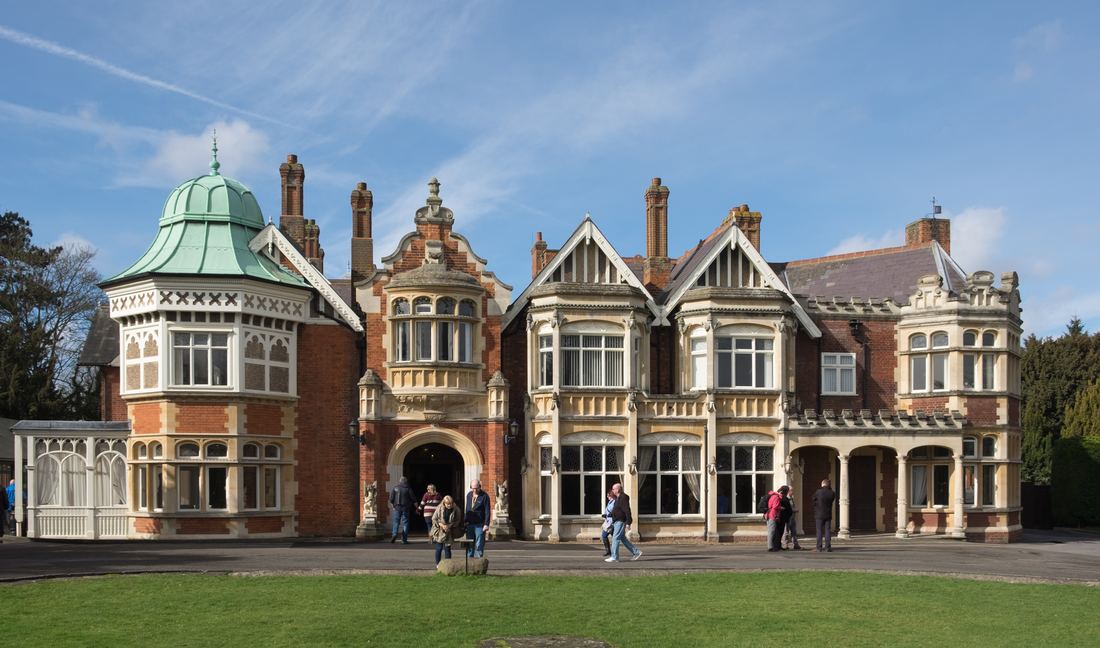
- Stanford Encyclopedia of Philosophy: The Turing Test
- UC San Diego Today: AI Can Seem More Human Than Real Humans in a Classic Turing Test
- Live Science: GPT-4.5 is the first AI model to pass an authentic Turing test, scientists say
Facts on this page were checked against these sources.
- Alan Turing at Princeton, 1936: Unknown author, Public domain
- Bletchley Park, where Turing worked on codebreaking: DeFacto, CC BY-SA 4.0
Text written by Strawberry Lemonadai.
← Where the Word Robot Came FromDeep Blue vs Kasparov, 1997 →




_at_Princeton_University_in_1936.jpg)
